Suzuki GSX-8R
Suzuki's middleweight sportbike — 776cc parallel twin (shared with GSX-8S and V-Strom 800DE), 82bhp. Launched 2024. Half-faired sportbike styling on the GSX-8S chassis. Direct rival to Honda CBR650R and Triumph Daytona 660. UK from £8,499. Bidirectional quickshifter and full IMU standard. A2 restrictable.
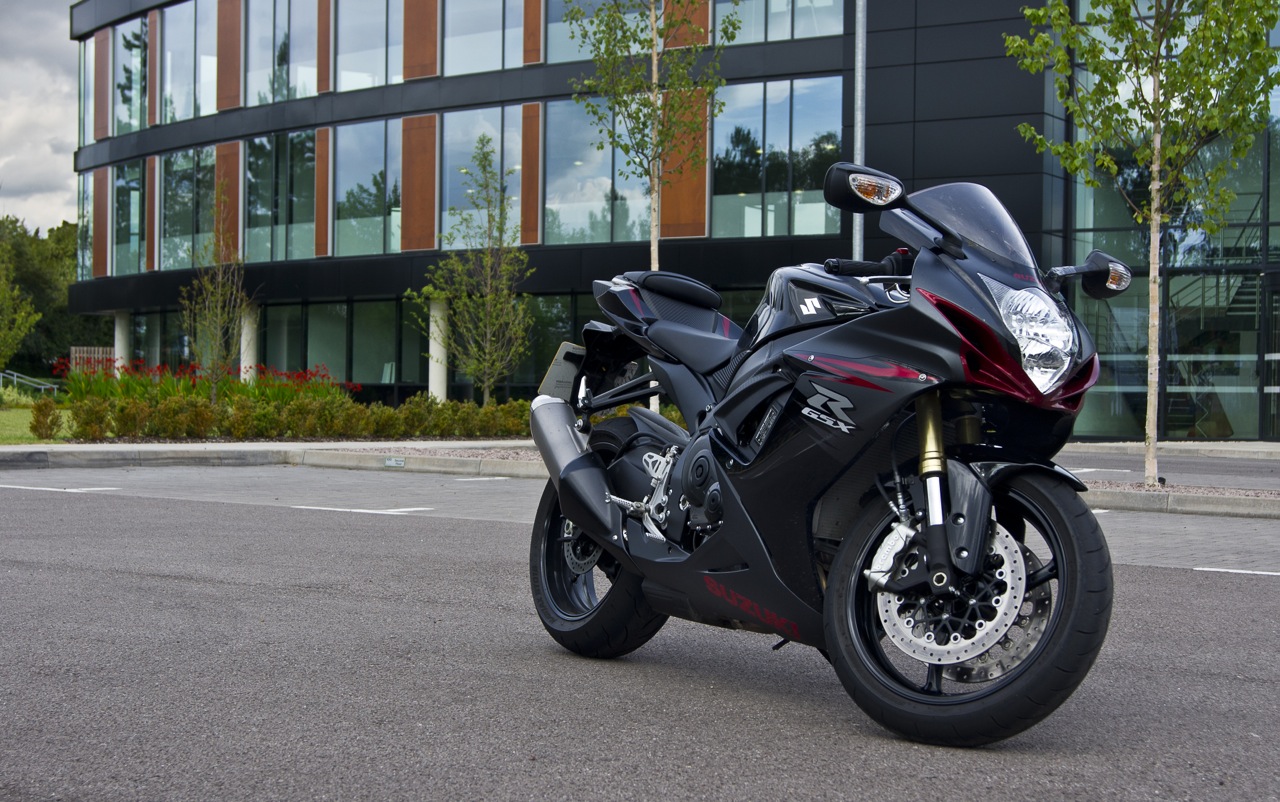
- Engine
- 776 cc
- Power
- 82 PS
- Weight
- 205 kg
- Seat height
- 810 mm
- A2 licence
- Restrictable
Liquid-cooled DOHC parallel-twin, 270° crank
wet
The short version
Forecourt score
Value 50 · Insurance 66 · Theft 65
The Suzuki GSX-8R costs about average to insure (around £460/yr typical). Theft risk is moderate. It can be restricted for an A2 licence. We don't yet hold model-specific depreciation for the Suzuki GSX-8R; our default estimate is around 30% lost over three years.
A bike-specific blend of value retention, insurance and theft risk (weighted 40/35/25). Bikes carry no MOT reliability data, so reliability isn't scored. Higher is better. The value pillar uses our default estimate for this bike, not a model-specific figure.
Variant: GSX-8R
Engine
Petrol · 776cc
Power
82 ps
Torque
78 Nm
Weight
205 kg
Seat
810 mm
Transmission
6-speed manual
Economy
55 mpg
License
A2 restrictable
GSX-8R — 776cc parallel-twin, 82bhp, 6-speed with bidirectional quickshifter standard. Showa SFF-BP forks, full IMU + cornering ABS. A2 restrictable. 14L tank.
Tell us about the one you're looking at
Tidy and well looked-after for its age — the typical clean bike.
Estimated market value
£6,587
Range £5,928 – £7,246
HIGH CONFIDENCE
Holding value
Bikes hold value far better than cars — typical motorcycle 3-year depreciation is 25–32%, against cars' 40–50%. Some bikes (Hayabusa, Gold Wing, classic Z1000) actually appreciate in the 7–15 year zone as cult demand outstrips supply.
New
£8,899
At 5 years
£5,339
At 10 years
£3,738
Value loss by phase
Each band shows the share of original value lost during that window — not cumulative. Appreciation (green, marked +X% gained) is real for bikes that develop cult status.
UK new price by year
How we estimate this
We don't yet hold model-specific depreciation for this bike. The figures above are our default estimate for machines of this kind, currently applied to 34 models in the catalogue — treat them as a starting point, not a measurement of this model. Bike residuals depend heavily on theft history, service-stamp count and crash-damage signatures. Figures assume a clean, fully-stamped example.
What it costs to own
Indicative running costs at 3,000 miles a year — the UK average from DfT travel and traffic statistics. Chain-drive bikes carry a chain/sprocket consumable line; tax (typically £25–£100/yr) and depreciation are excluded — see the section above for value retention.
3-year total
£2,661
Per year
£887
Per mile
£0.30
Service costs assume independent specialist labour and OE parts. Tyre intervals reflect typical UK road riding — track-day usage burns through rear tyres in <2,000 miles. Fuel uses the variant MPG at the current DESNZ pump price of £1.73/L (week commencing 28/09/2026). Electric bikes are costed from battery capacity and published range at the current domestic electricity price; where a bike has no published range we show no energy line rather than guess. Lower-mileage riders see proportionally lower totals; higher-mileage commuters pay roughly linearly more.
Estimated insurance
ABI motorcycle scheme · Comprehensive · 5 yr NCB
Indicative annual comprehensive premiums for this bike. Bike insurance is far more sensitive to licence tier and rider age than cars — pick the combination closest to your circumstances.
Licence
Age
No-claims bonus
5 yearsRisk profile
Estimated annual premium · typical, age 30-39
£460/ year
Roughly £38 per month
Typical
Suburban postcode, 3+ years NCB, standard security (Thatcham chain + disc lock), no recent claims.| Age band | Lower risk | Typical | Higher risk |
|---|---|---|---|
| Age 17-21 | £759 | £1,012 | £1,417 |
| Age 22-29 | £466 | £621 | £869 |
| Age 30-39Selected | £345 | £460 | £644 |
| Age 40-49 | £304 | £405 | £567 |
| Age 50+ | £276 | £368 | £515 |
How we estimate this
Premiums combine licence tier, rider age, no-claims bonus and a risk-profile multiplier on top of a bike-specific baseline. Bike insurance is materially more sensitive to licence tier (CBT / A1 / A2 / A) than car insurance, and young riders pay considerably more than older riders even on the same machine. Always get individual quotes before buying.
Theft risk
Bike-specific · Met Police + insurance reporting
UK bike theft rates are an order of magnitude higher than car theft. Nakeds and supersports lose more to professional gangs; large adventure bikes and tourers are statistically much safer.
Theft risk score · 1 to 4
2/4Medium risk
Medium risk
Some theft pattern, particularly in urban postcodes. Thatcham-approved chain plus disc lock recommended; secure overnight parking helps premiums.Theft hotspot postcodes
Postcode prefixes only; full London hot zone runs across E, N, NW, SE, SW, W boroughs depending on the model.
What this means for you
Sportbike, popular target — chain + disc lock essential.
How we set this band
Bands derived from Met Police bike-theft reporting (most-stolen lists) cross-referenced with insurance industry underwriting data. Model + postcode are the two biggest factors in motorcycle theft risk in the UK, materially more than vehicle value.
What goes wrong
5 known issues · sorted by severity
Documented failure modes from UK owner forums, dealer service bulletins, and aggregated mechanic feedback. Mileages are approximate — different riders see different intervals depending on use and maintenance. Always address "high"-severity items before resale.
High severity
0
Medium
1
Low / cosmetic
4
| Severity | Part / issue | Cost |
|---|---|---|
| medium | Chain & sprockets 10-14k mi | £200 |
| low | Front brake pads 8-12k mi | £90 |
| low | Battery every 3-4 years | £100 |
| low | TFT dash glitches Same chassis software as GSX-8S — early 2024 fixes applied any | warranty |
| low | Side stand position switch any age | £60 |
How we score severity
High — strands the bike or causes consequential damage if left. Medium — service item that affects ride quality or risks failure. Low — cosmetic or minor inconvenience. Costs are independent-specialist UK rates for parts and labour together; main dealer prices typically run 30–50% higher.
Safety recalls
Manufacturers occasionally issue safety recalls to fix a fault free of charge. You can check whether the Suzuki GSX-8R, or your exact vehicle, has any outstanding recalls on the official DVSA service.
Check on GOV.UKOpens the Driver & Vehicle Standards Agency recall checker. Choose the make, model and year of manufacture — no registration needed.
Strengths
- +Bidirectional quickshifter standard at sub-£9k
- +Full IMU + cornering ABS
- +Showa SFF-BP forks
- +82bhp in the middleweight sweet spot
- +A2 restrictable
Watch-outs
- −Newer model — less established used market
- −Suzuki dealer network thinner than Honda/Yamaha
- −Stock Dunlop Sportmax tyres wear quickly
- −Aggressive sportbike posture for commutes
Related bikes
Common questions
Suzuki GSX-8R, answered from the data
- How much is a used Suzuki GSX-8R worth?
- A 2024 Suzuki GSX-8R in good condition with around 6,000 miles is worth roughly £6,600 (typical range £5,950–£7,250). Dealer asking prices sit higher than private sales, and a full service history, no crash damage and an unbroken theft record are what hold a bike at the top of its range.
- How quickly does the Suzuki GSX-8R depreciate?
- We don't yet hold model-specific depreciation for the Suzuki GSX-8R. Our default estimate for machines of this kind is a loss of about 30% over three years, against a 25–32% norm for bikes generally — treat it as a starting point rather than a measurement of this model. Bikes hold value considerably better than cars, which typically lose 40–50% over the same period.
- Can you ride the Suzuki GSX-8R on an A2 licence?
- Only if restricted. The Suzuki GSX-8R is an unrestricted category A machine as sold, but it can be restricted to A2 limits. A restricted example is worth checking carefully — the paperwork matters to insurers, and a derestricted bike on an A2 licence is not road legal.
- How much does it cost to insure a Suzuki GSX-8R?
- Expect around £460 a year to insure a Suzuki GSX-8R, typically £340–£660. That assumes age 30, full license, 3yrs NCB, suburban postcode. Bike premiums move far more on licence tier, rider age and postcode than car premiums do, so treat this as a starting point rather than a quote.
- What goes wrong on a used Suzuki GSX-8R?
- The wear and failure points we track for the Suzuki GSX-8R are: chain & sprockets (around 10-14k mi, £200); front brake pads (around 8-12k mi, £90); battery (around every 3-4 years, £100). We don't publish a reliability score for bikes — the MOT dataset behind our car scores doesn't support one at model level — so treat these as the specific things to inspect rather than a verdict. A full service history and a fresh MOT without advisories remain the best protection.
- What does a Suzuki GSX-8R cost to run?
- Expect around 55 mpg, about £430 a year in fuel or energy, £240 for an annual service, £280 a pair for tyres every 7,000 miles, £270 for a chain and sprockets every 12,000 miles. Figures assume 3,000 miles a year, the UK average from DfT travel and traffic statistics, and current DESNZ pump prices. The cost-of-ownership table on the profile breaks this down per year and per mile.
- Is the Suzuki GSX-8R likely to be stolen?
- The Suzuki GSX-8R is a moderate theft target. Sportbike, popular target — chain + disc lock essential. Theft is concentrated in E, N, SE, SW postcode areas. A Thatcham-approved chain and ground anchor, a disc lock and a tracker are what insurers look for, and secure overnight storage moves a premium more than almost anything else.
Answers are generated from this bike's Forecourt data — curated specifications, our valuation model and the week's DESNZ fuel and energy prices — and update with the weekly data refresh.