Ranked #194 car in the UK · Fastback · 993 units sold last year
Peugeot 408
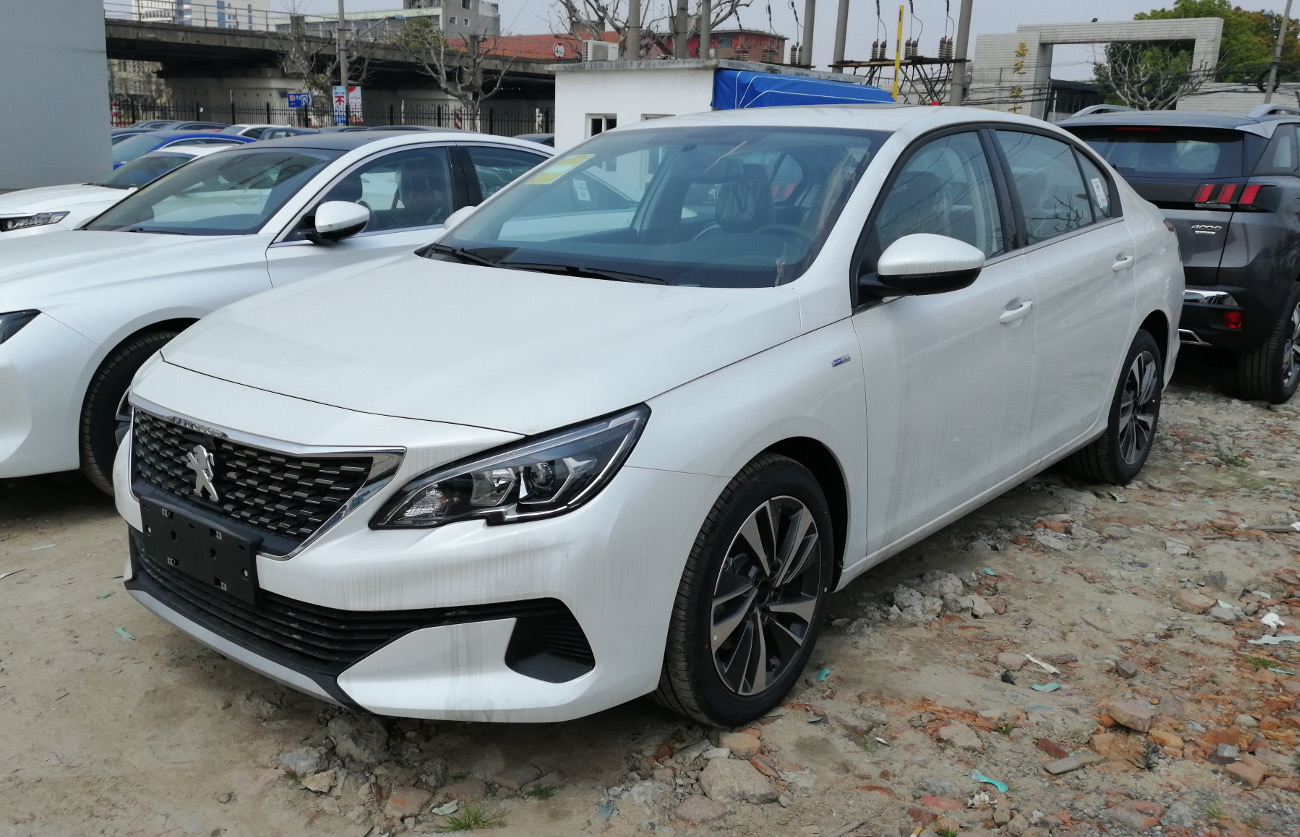
The Peugeot 408 is the striking fastback crossover - a bold, coupe-SUV-meets-hatchback that stands out in a sea of conventional family cars. Petrol, plug-in hybrid and the electric e-408 feature. It blends an eye-catching design with a comfortable ride and Peugeot's compact i-Cockpit cabin. It's about style and individuality rather than outright space or driving sparkle. As a used buy it's a distinctive, well-equipped alternative to the obvious crossovers and hatchbacks.
How these figures are sourced — the valuation is anchored to a researched used-market price for this model (AutoTrader median, 2023 at 30k miles). Reliability, mileage and variant data are real DVSA MOT records. Dimensions, tyre sizes and costs, servicing figures and the insurance group are segment-level estimates rather than sourced per car, and are being replaced model by model.
- Body
- Fastback
- Years
- 2022–2026
- Fuel
- Petrol / Plug-in Hybrid / Electric
- Economy
- 48 mpg
- Insurance
- Group 24
combined
The short version
Forecourt score
Value 37 · Reliability 57 · Insurance 47 · catalogue percentiles
The Peugeot 408 holds its value about averagely and costs about average to run. Its MOT-based reliability is good — an MOT score of 79/100. On three-year value retention it ranks better than 37% of models.
The Forecourt score blends how this car ranks against the catalogue on value retention, reliability and insurance cost (weighted 40/40/20) — the from-new ownership picture. Higher is better; running cost is not yet folded in.
Eligible for £1,500 off — UK Electric Car GrantBand 2
Applies to the e-408 (electric). Applied at point of sale — no application needed. Details on gov.uk.
Pick your version
Estimates are tuned to the version you choose.
Fuel
Petrol · 1199cc
Power
130 ps
Drivetrain
FWD
Cam drive
Wet belt
Quoted MPG
48 mpg
The volume Peugeot 408. 1.2 PureTech 130 - wet-belt (the recurring Stellantis story); budget for the belt service.
Tell us about the one you're looking at
Tidy and well looked-after for its age — the typical car.
Remembered as you browse other cars.
Optional — fills in the exact year and ULEZ status for your specific car. The registration isn’t stored.
Estimated market value
How we got this number — click for the breakdown, or to challenge it.£21,350
Range £17,150 – £26,000
medium confidence
Fair value — depreciation is moderating.
At 25,905 miles it’s about the ~26,495 typical for a 3-year-old.
Seen one for sale?
A data-led guide from the depreciation curve, UK parc trend and reliability — not financial advice.
The depreciation curve
How a 2023-registration Peugeot 408 loses value over time.
What it costs to own
Based on the 2023 car with 25,905 miles you entered above — worth about £21,350 today — here is the cost of owning it for the next 5 years, at roughly 8,635 miles a year.
5-year total
£25,137
Per year
£5,027
All-in per mile
£0.58
Fuel per mile
16.4p
Best age to buy — around 5 years
A 5-year-old example loses roughly £2,350 a year — 55% less than the £5,250 a one-year-old sheds. The steepest drop is behind it.
Uses current UK pump and home-charging prices (DESNZ weekly), typical-driver insurance and manufacturer service intervals. "Fuel per mile" is just the energy input — so an EV at ~9p and a diesel at ~22p make running-cost comparison direct. A guide; your own costs will vary.
How it compares
Where this car ranks against the 340 vehicles in our index — higher is better.
Percentile rank across our full index. A measure is shown only where the data spreads meaningfully across the index.
Estimated insurance
Group 24 of 50 (mid — around the UK average) · Comprehensive · 3 years NCB
Indicative annual comprehensive premiums for this car, by driver age band and risk profile. Pick the combination closest to your circumstances.
Estimated annual premium · typical, age 33-39
£755/ year
Roughly £63 per month
Typical
Average UK driver — 3 years NCB, average postcode, no recent claims.| Age band | Lower risk | Typical | Higher risk |
|---|---|---|---|
| Age 17-25 | £1,720 | £2,150 | £2,795 |
| Age 26-32 | £898 | £1,056 | £1,289 |
| Age 33-39Selected | £664 | £755 | £890 |
| Age 40-49 | £564 | £626 | £726 |
| Age 50+ | £502 | £558 | £659 |
How we estimate this
Indicative annual comprehensive premium estimates. The 'Typical' figure represents an average UK driver in each age band; Lower and Higher risk show the realistic spread driven by factors UK insurers legitimately price on (postcode, occupation, claims history, NCB, voluntary excess, modifications). Based on 10,000 miles/yr, £250 voluntary excess, and the no-claims bonus selected above. Always get individual quotes before buying.
Expected annual costs
Adjust the annual mileage to match how you'll actually use the car. Insurance is what you selected above (age 33-39, typical risk, 3 yrs NCB).
Routine service
£185
Annual main-dealer service
Major service
£210
Every 2 years, annualised
Road tax
£200
Standard rate, post year-one
Fuel
£569
48 mpg, £1.73/L
Insurance
£755
Age 33-39, group 24
Clean-air zones
⚠ Depends on variantBased on London ULEZ standards — Birmingham, Bath, Bristol, Sheffield, Glasgow and other UK clean-air zones generally follow the same rules.
Excludes depreciation and unscheduled repairs (see next section).
Unexpected costs
What out-of-warranty repairs typically run, by mileage band. Your selected mileage is highlighted.
0-30k miles
£80
per year · low risk
30-60k miles
£240
per year · low risk
60-100k miles
£520
per year · medium risk
100k+ miles
£900
per year · high risk
Tyres
205/60 R16 · 225/50 R17 · 245/40 R18
What a full set of four will cost you (including fit and balance), and which brand each tier of buyer should pick. A typical set lasts about 24,000 miles.
Budget
£300
set of 4, fitted · £60 per tyre
Mid-range
£440
set of 4, fitted · £95 per tyre
Premium
£620
set of 4, fitted · £140 per tyre
What to fit
Optional extras worth paying for
Factory options ranked by how much of their original cost they recover at resale. Anything above 70% return tends to make money back; below 40% is paying for your own enjoyment.
| Option | New cost | Added used value | Return |
|---|---|---|---|
Tow bar (factory-fit) Niche, but the buyers who want one will pay for it. | £650 | £450 | 69% |
Parking sensors & reversing camera Near-expected now — its absence costs more than its presence returns. | £500 | £300 | 60% |
Heated seats / cold-weather pack | £450 | £200 | 44% |
Metallic or premium paint Almost universal — an unusual colour is the bigger resale risk. | £600 | £200 | 33% |
Panoramic / opening roof | £1,100 | £350 | 32% |
Larger alloy wheels | £700 | £200 | 29% |
What fails at MOT
Recorded in DVSA MOT test data for this model, not owner reports. Ordered against 25,905 miles.
Watch now
Failure typically happens around your current mileage.
Upcoming
Typically happens at a higher mileage than yours.
Already due
Past its usual failure mileage. Either already fixed, or about to.
Tyres & wheelsUpcoming
Recorded in 13.6% of MOT tests 60k-100k miles — from 7,153 DVSA MOT tests analysed.
Lighting & signallingWatch now
Recorded in 1.6% of MOT tests 30k-60k miles — from 7,153 DVSA MOT tests analysed.
BrakesWatch now
Recorded in 0.9% of MOT tests under 30k miles — from 7,153 DVSA MOT tests analysed.
Driver's viewWatch now
Recorded in 1.1% of MOT tests 30k-60k miles — from 7,153 DVSA MOT tests analysed.
Seat belts & restraintsWatch now
Recorded in 0.5% of MOT tests 30k-60k miles — from 7,153 DVSA MOT tests analysed.
EmissionsWatch now
Recorded in 0.5% of MOT tests 30k-60k miles — from 7,153 DVSA MOT tests analysed.
"Parts low/medium/high" indicates how easy the replacement part is to source — discontinued or specialist parts mean longer workshop time and bigger bills.
Safety rating
Euro NCAP's independent crash-test rating for the Peugeot 408, from its 2022 assessment.
The Peugeot 408 is very closely related to the 308 tested earlier in 2022.
Independent crash-test data from Euro NCAP. Star ratings reflect the test protocol of the year shown — newer protocols are stricter, so a 5-star from 2024 represents a higher bar than a 5-star from 2014. Euro NCAP ratings run for six years from publication; a lapsed rating means the protocol has moved on, not that the car performs any worse than it did on test.
MOT outlook
How this model fares at its MOT as it ages — from 7,108 real DVSA test records.
MOT pass rate
91.3%
of 3-year-old examples pass — not yet a wide enough age span to chart a trend.
Longevity
Not enough older examples yet to gauge longevity.
What’s on the road
The fuel-type split of every 408 with MOT history in the DVSA record. From 7,006 vehicles tested at least once - not the number on the road today, which is lower.
- Petrol 63.0%
- Hybrid 31.9%
- Electric 5.0%
What fails at the first MOT
The defect categories a 408 registered 2023 fails on at its first MOT, from 734 first tests. Every car here is the same age and the same generation, so these are the faults that show up first - not the wear a high-mileage older example collects.
- Tyres & wheels4.8%
- Brakes1.1%
- Driver's view0.5%
- Lighting & signalling0.4%
- Seat belts & restraints0.4%
- Emissions0.1%
Share of first MOT tests recording at least one defect in that category. DVSA test-item categories, not parts: “Driver’s view” covers mirrors, wipers and glass.
Reliability
Good
First-MOT pass rate and defect rate for cars registered 2018 onward (734 first tests), with cohort survival — medium confidence.
MOT outlook
Insufficient MOT history at this car's reference age — too few tests to compute a reliable percentile.
Things owners say
- 01The PHEV suits low-BIK use if charged; the petrol and electric e-408 cover the rest.
- 02Bold, distinctive styling is the draw - it stands out from conventional family cars.
- 03The i-Cockpit's tiny wheel and high dials suit some better than others - try it before buying.
Safety recalls
Manufacturers occasionally issue safety recalls to fix a fault free of charge. You can check whether the Peugeot 408, or your exact vehicle, has any outstanding recalls on the official DVSA service.
Check on GOV.UKOpens the Driver & Vehicle Standards Agency recall checker. Choose the make, model and year of manufacture — no registration needed.
Theft risk
A general indicator from UK 2025 theft data and this car’s characteristics — not a prediction for any one vehicle.
Whole-car theft
Higher
Higher-value cars like this are relay-theft targets — keyless entry can be exploited from the driveway in under a minute.
Parts theft
Higher
Hybrid versions are a catalytic-converter target — a hybrid cat is rich in precious metals and can be cut out in about a minute.
Worth doing
- Keep keys in a Faraday pouch and away from the front door to block relay attacks.
- A catalytic-converter guard or forensic marking makes a hybrid far less appealing to cut.
- A visible steering lock is a cheap, strong deterrent on a frequently-targeted car.
Clean-air zones
Whether driving a Peugeot 408 into a UK clean-air zone will cost you anything. Rules use the same Euro standard across most zones — petrol from 2006 and diesel from 2015 onwards are exempt; pure electric is always exempt.
Charging zones for cars
| City | Area | Daily charge | Likely outcome |
|---|---|---|---|
| London | All of Greater London (within the M25) | £12.50 | Likely exempt Petrol from 2006 meets Euro 4. |
| Birmingham | Inside the A4540 Middleway | £8.00 | Likely exempt Petrol from 2006 meets Euro 4. |
| Bristol | City centre and part of the Portway | £9.00 | Likely exempt Petrol from 2006 meets Euro 4. |
| Glasgow | City centre | — | Likely exempt Petrol from 2006 meets Euro 4. |
| Edinburgh | City centre | — | Likely exempt Petrol from 2006 meets Euro 4. |
| Aberdeen | City centre | — | Likely exempt Petrol from 2006 meets Euro 4. |
| Dundee | City centre | — | Likely exempt Petrol from 2006 meets Euro 4. |
Zones that don't charge private cars
- Bath — City centre (Private cars and motorbikes are not charged).
- Bradford — Outer ring road and the Aire Valley (Private cars are not charged).
- Sheffield — Inside the A61 inner ring road (Private cars are not charged).
- Newcastle & Gateshead — City centres and the Tyne, Swing, High Level and Redheugh bridges (Private cars are not charged).
- Portsmouth — Part of the city centre (Applies to taxis, PHVs, buses, coaches and HGVs only).
Model-level guidance only. To check a specific registration, use the official gov.uk clean-air zone checker. Zone charges and boundaries are set by local councils and change over time.
Company car tax
What HMRC's Benefit-in-Kind charge looks like if you ran this Peugeot 408 as a company car, by tax year and income-tax band. Calculated from a CO₂ of 137 g/km and a WLTP electric range of 41 miles, using £40,000 as the P11D value.
| Tax year | BIK % | Tax @ 20% | Tax @ 40% | Monthly @ 20% | Monthly @ 40% |
|---|---|---|---|---|---|
| 2025-26 | 32% | £2,560 | £5,120 | £213 | £427 |
| 2026-27 | 33% | £2,640 | £5,280 | £220 | £440 |
| 2027-28 | 34% | £2,720 | £5,440 | £227 | £453 |
| 2028-29 | 34% | £2,720 | £5,440 | £227 | £453 |
| 2029-30 | 34% | £2,720 | £5,440 | £227 | £453 |
P11D value is approximated from the latest new price; the exact figure on your tax code will depend on options fitted. The 4% diesel surcharge applies only to non-RDE2 (pre-2021) diesels — we assume RDE2 compliance for current models. Bands and rates from HMRC's Autumn Budget 2024 confirmation through 2029/30.
Servicing & the dealer network
How well-supported Peugeot is across the UK — a practical read on how easy servicing, parts and warranty work will be to find.
Franchised UK dealers
~165
Large network
Mass-market
Network size relative to the UK's largest (Peugeot is 3.7% of all franchised outlets)
Servicing, parts and warranty work are easy to find UK-wide, and most independent garages know the brand well — which keeps maintenance competitive.
For context, the UK has roughly 4,500 franchised car-dealer outlets in total, plus about 15,500 independent garages.
Approximate figures, curated from public UK industry sources (NFDA, Car Dealer Magazine). Franchised networks shrink year on year — these indicate network size, not an exact count.
Dimensions & weight
These are segment estimates, not manufacturer figures. 296 of 325 catalogued cars share one of 14 identical dimension sets, so they describe a class rather than this particular car. Sourced figures replace them model by model.
Length
4,700 mm
Width
1,840 mm
Height
1,450 mm
Kerb weight
1,550 kg
Boot
460–480 L
Fuel tank
48 L
How many are still out there
How the UK Peugeot 408 fleet splits: taxed and on the road, parked off the road on a SORN, and gone from the register where that figure is available.
Currently registered
6,346
Currently taxed & on road
6,188
98% of all registered
SORN (off road)
158
2% of all registered
Scrapped or exported
n/a
not in this DfT extract
UK fleet trend — 2023 to 2025
+24.1% vs 2024Source: DfT VEH0124 vehicle licensing statistics (year-end 2025) · Updated 1 Oct 2026
Similar cars
Other fastback models worth looking at
Same underpinnings
Built on the Stellantis EMP2 platform
Mid-size modular platform from PSA used across compact SUVs and mid-size cars. Supports PHEV variants. Different badges, often substantially different residuals, but broadly the same mechanicals and repair cost profile.
Peugeot
308
Peugeot
3008
Peugeot
5008
Vauxhall
Astra
Vauxhall
Grandland
Vauxhall
Combo Life
DS
4
DS
7 Crossback
Citroën
C5 Aircross
Citroen
Berlingo (passenger)
Peugeot
Partner
Peugeot
Rifter
Efficient Modular Platform 2 · Stellantis
Common questions
Peugeot 408, answered from the data
- Is the Peugeot 408 reliable?
- The Peugeot 408 scores 79/100 on Forecourt's MOT-based reliability measure. That score uses first-MOT pass rate and defect rate for cars registered 2018 onward (734 first tests), with cohort survival — medium confidence.
- How much does a used Peugeot 408 cost?
- A 2023 Peugeot 408 with around 25,905 miles is worth roughly £21,350 today (typical range £18,350–£24,400). Dealer forecourt prices sit higher and part-exchange offers lower; newer or lower-mileage examples cost more.
- How quickly does the Peugeot 408 depreciate?
- A new Peugeot 408 typically loses about 44% of its value over the first three years, then depreciates more slowly. Buying at three to five years old avoids the steepest part of the curve.
- What insurance group is the Peugeot 408?
- The Peugeot 408 sits in insurance group 24 of 50 — the middle of the scale. Exact premiums depend on the trim (some versions sit a few groups higher or lower), your age, postcode and no-claims history.
- What goes wrong on a used Peugeot 408?
- The parts most often recorded at MOT on the Peugeot 408 are: tyres & wheels (typically around 60k-100k miles, £80-£500 to put right); lighting & signalling (typically around 30k-60k miles, £15-£120 to put right); brakes (typically around under 30k miles, £150-£500 to put right). A full service history and a recent MOT with no advisories are the best protection.
- What does the Peugeot 408 cost to run?
- Expect around 48 mpg combined on the 1.2 PureTech 130, £200 a year in road tax, about £185 for a standard annual service. The full cost-of-ownership table above breaks this down per year and per mile for the exact year and mileage you choose.
- Is the Peugeot 408 ULEZ compliant?
- Whether a Peugeot 408 is ULEZ compliant depends on its engine and registration date: petrol from 2006 and diesel from September 2015 generally qualify, and electric versions are always exempt.
- How many Peugeot 408s are on UK roads?
- About 6,188 Peugeot 408s are currently taxed and on the road in the UK, from DfT vehicle-licensing data.
Answers are generated from this car's Forecourt data — DVSA MOT records, DfT licensing statistics and our valuation model — and update with the weekly data refresh.